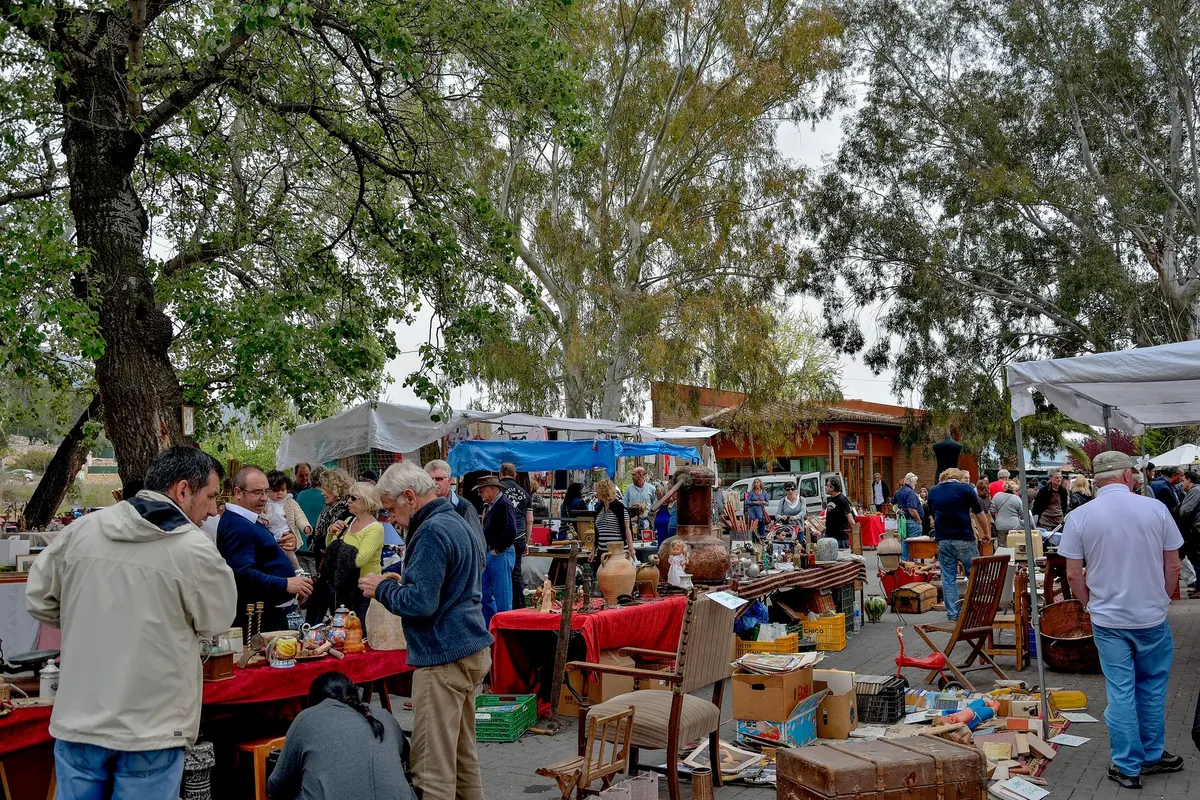
Everyone who collects anything has done it. You walk into a fair with a sensible budget and a clear head, and two hours later you're carrying three things you never planned to buy — one of which has a hairline crack you somehow missed on the stall. The stands look wonderful, the dealers are charming, and everything feels as though it might be gone by lunchtime. It almost certainly won't be. Antique fairs reward patience far more than panic, and the mistakes newcomers make are remarkably consistent. Here are the ones worth knowing before you hand over your money.
Rushing in without a first lap
The single most useful habit at any fair is to walk the whole thing before buying anything. Not a glance down each aisle — a proper lap, with stall numbers noted and a few photographs taken. Ask before photographing a stand; most dealers are happy, some aren't, and it costs nothing to check.
That first circuit does two things. It calibrates your eye, so that by the time you see the third piece of the same type you can tell which is the better one. And it reminds you that the object you fell for in aisle one is rarely unique. If something genuinely rare and fairly priced does disappear while you think about it, accept that as the cost of buying well. It happens far less often than the fear suggests.
Haggling at the wrong moment, or in the wrong way
Negotiation is part of fair culture, but it has a sequence. Examine the piece first, ask your questions, then discuss price. Opening with "what's your best price?" before you've looked at the base of a vase reads as unserious, and dealers price accordingly.
Useful phrases are gentler than people expect: "Is there any movement on this?" or "Would you consider a little less if I take both?" Bundling genuinely works — a dealer who won't shift on one item will often do a deal on three. So does paying in cash, since card fees come out of their margin.
- Don't haggle on low-value items. It sours the exchange and saves you pennies.
- Don't quote online listings as leverage. Dealers know the market; it reads as a challenge, not a conversation.
- Don't walk away mid-negotiation as a tactic unless you mean it.
- Do ask whether they can hold something while you finish the lap. Many will, especially with a small deposit.
Ignoring condition because the price looks kind
There is no such thing as a bargain with a hidden repair. Condition drives value more than age, and the damage is often deliberately discreet. Look for chips and nibbles along rims and feet rather than in the middle of a piece, where the eye naturally goes. Turn ceramics over. Run a finger — gently, and with permission — around the rim of a plate or the lip of a jug. Crazing under the glaze, hairlines that show under strong light, and spraying around a handle are all worth knowing about before you fall in love with the shape.
Restoration is not automatically a reason to refuse. A well-executed repair on a rare piece is a different matter from a marriage — a teapot with a lid from a different set, a chair with replaced legs, a picture in a frame that doesn't belong to it. Ask directly: "What's original here?" Then ask again about the parts you can't see. A small UV torch in your bag will show up repainting and re-gilding quickly, and no dealer minds a careful buyer.
Not asking what you're actually buying
Marks, signatures and labels are evidence, not proof. They can be added later, and plenty of good-looking objects are honestly described as "in the style of". Ask about age, maker, previous ownership and any repairs. Ask what comes with it — the original box, a key, a certificate, a fitted case.
Then ask for a written receipt that describes the item, the date and the stallholder's details. It takes a minute, protects you if you ever need to insure or resell, and tells the dealer you're serious.
Budgeting on hope
Set a ceiling before you leave the house and decide in advance what it covers. A workable approach is to split your money: one portion for the small, cheerful purchases you'll inevitably make, and a reserve for the one good thing you didn't know you wanted. Keep the reserve physically separate, or you'll spend it on a box of assorted curiosities by eleven o'clock.
Remember the costs that sit outside the ticket price: restoration, a mount or frame, transport, and insurance if the piece is valuable. If you're spending money that matters to you, it's sensible to think about whether the object is something you'll still want in five years, and to seek a specialist opinion before committing to anything significant. Fairs are wonderful places to learn, but nobody there is obliged to guarantee future value.
Forgetting how it gets home
A tape measure and a note of your shelf dimensions on your phone will save you more often than any price guide. So will a photograph of the space you're buying for. Bring bubble wrap and a box in the car boot if you're driving; if you're on the train, think twice about the large mirror, however good it is.
Ask the dealer how they'd pack it. They've done it hundreds of times. And don't leave anything delicate in a hot car or carry a boxed ceramic by the lid handle.
Before you go: a five-minute checklist
- Set a total budget, and split off a reserve for one good piece.
- Take cash, a tape measure, a small torch and a bag for wrapping.
- Walk a full lap before buying anything.
- Inspect properly, then ask about condition, restoration and provenance.
- Negotiate politely, once you've shown real interest.
- Get a written receipt, and take the dealer's card.
Do those things and you'll still come home with one impulsive purchase. That's part of the pleasure. The difference is that you'll know exactly what you bought, what you paid for it and why — and the dealer will be glad to see you again next month.