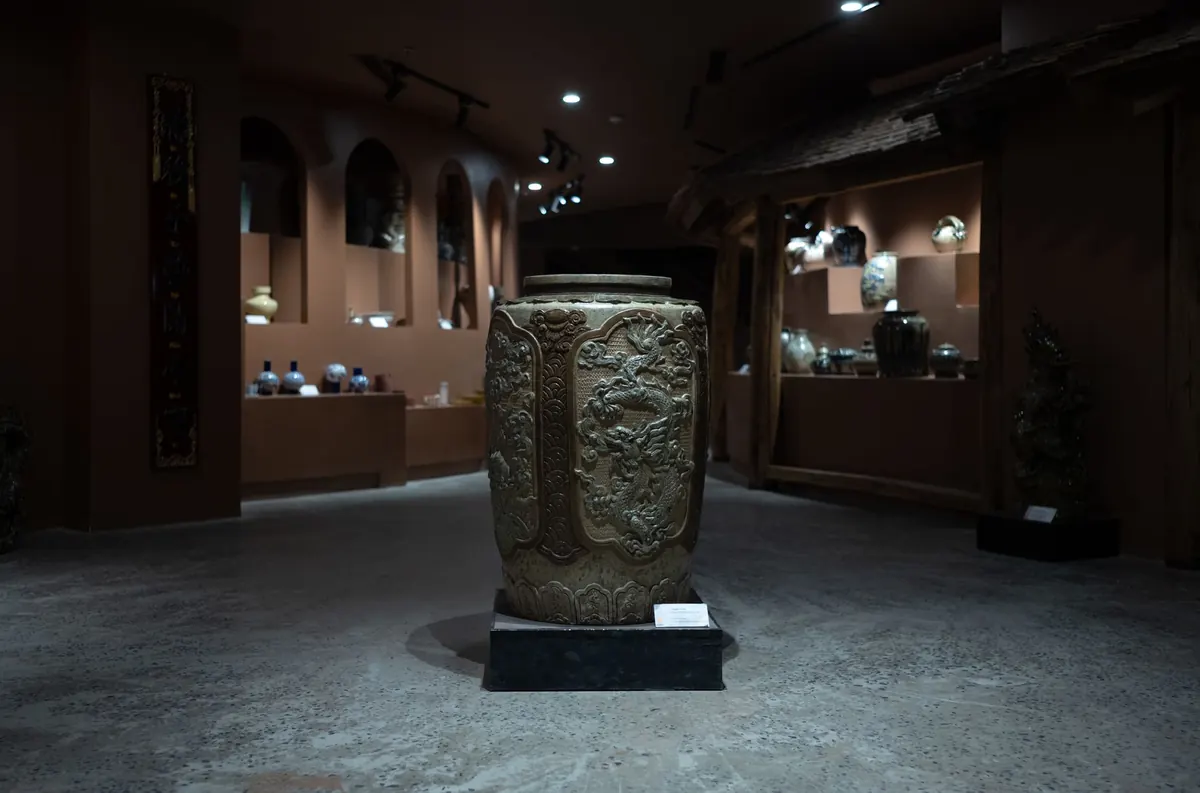
One good antique in a modern room is a quiet act of confidence. A Georgian chest against white plaster, a copper pan on an induction hob, a Victorian pine table in a kitchen of flat-fronted cabinets — each gives a room a memory. The trouble starts when the second, third and fourth piece arrive, and the place begins to look as though a rope should be strung across the doorway.
Mixing old and new is less about taste than about discipline. Work through scale, colour, texture and restraint, in that order, and a room feels collected rather than themed. Skip a step and you get a showroom.
Start with one anchor piece
Choose the antique you would keep if you had to give the others away, and build the room around it. One strong piece per sightline is usually enough. In a sitting room that might be a mahogany chest doubling as a side table beside a modern sofa; in a kitchen, a scrubbed pine table standing in for a breakfast bar; in a hallway, a narrow console with a lamp and a dish for keys.
Then stop. Live with it for a fortnight before buying anything else. Photograph the room from the doorway, and look at where your eye lands. If the new piece is competing with three others, you have too many anchors and none of them is doing its job.
Scale before style
Period furniture was made for period rooms: higher ceilings, smaller windows, deeper skirting boards. Modern rooms tend to be lower and lighter, and that mismatch — not the age of the piece — is what usually goes wrong.
- Tall pieces. Tallboys, longcase clocks and wardrobes need height above them. In a low room they dominate everything else you own.
- Long, low pieces. A Victorian chiffonier, a farmhouse bench or a shallow console sits happily under a modern window or behind a low sofa.
- Delicate pieces. A slim Hepplewhite chair next to a deep, square-armed sofa will vanish. Give it a heavier companion nearby — a dark oak stool, a stoneware jar, a brass lamp — to mediate between old and new.
Measure the wall, measure the piece, and leave a hand's width of clear space either side. Antiques need air around them far more than they need company.
Let colour and tone bridge the gap
Cool grey and off-white schemes flatter some woods and punish others. Warm, orange-toned mahogany and honeyed pine can turn brash against a cold grey wall, while walnut, dark oak, ebonised and painted pieces settle in more easily. If you love a piece that argues with its surroundings, change the wall rather than the piece: a deep green, charcoal or oxblood surface makes brass, gilding and polished timber glow.
Use antiques to echo colour already in the room. A blue-and-white jug picking up navy cushions. Amber glass repeating a leather chair. An old brass tray answering the handles on kitchen cabinets. One repeat is a link; three is a scheme.
Contrast texture, light and finish
Modern rooms are smooth: glass, lacquer, matt emulsion, engineered board. Antiques bring grain, crazing, hand-planed edges and the soft sheen that only decades of wax produce. That contrast is the whole point, so place them next to each other rather than trying to disguise the difference. Polished mahogany beside raw linen. A rough stoneware bowl on a glass table. Aged silver on a matt ceramic shelf.
Light matters as much as surface. Cool downlights flatten patina and turn old wood grey. Warm white bulbs (look for 2700K), a table lamp or two, and a picture light over a painting will do more for a collection than any rearranging. Put lamps on dimmers and keep one corner of the room deliberately low-lit.
A room full of antiques is a museum. A room with three, chosen well and used daily, is a home.
Break the set, and leave gaps
The fastest route to a museum feel is a matched suite: six identical dining chairs, a full dinner service lined up on a dresser, a row of same-sized prints. Split them. Two period chairs at a modern table with four contemporary ones. One blue-and-white plate on the wall, the rest in a cupboard. Shelves of varying heights, with a book leaning against a bowl and a candle stub among the china.
Then leave space. An empty stretch of wall, a bare shelf end, a table cleared for a day. Restraint reads as confidence; clutter reads as stock. The pieces you are not displaying are still part of the collection, and a box in a cupboard is not a failure.
Keep it in use
Antiques that are used look better than antiques that are protected. Sit on the chairs, eat off the plates, put flowers in the jug, pour from the glass. Wear, small chips and old repairs are the record of a life already lived; over-restoring a piece strips out exactly what makes it interesting.
A few sensible habits keep things in condition: keep furniture out of direct sunlight, use coasters and felt pads, avoid radiators and damp walls, and lift rather than drag. If something needs structural repair — veneer lifting, a joint opening, a wobbly leg — speak to a conservator before reaching for glue, and never varnish over original finish.
The eight rules at a glance
- Anchor each room with one antique, then stop buying for a while.
- Match scale before you match style.
- Choose woods and finishes that suit the wall behind them.
- Bridge old and new with a repeated colour, not a matching era.
- Contrast textures deliberately: polished against raw, matt against shiny.
- Break up sets, pairs and rows.
- Leave empty space, and rotate what you show.
- Use the pieces. A worn chair beats a preserved one.
Start with one piece, get its scale and colour right, and let the rest of the room stay quiet. The antiques will do the talking.
Photo: Lucas Tran / Pexels